Tuesday, August 5, 2008

World Cuisine Guide - Top Challengest Foods Menu in the World (Part I)

They say one man’s trash is another man’s treasure. The same could be said about food: one man’s nightmare may just be another man’s delicacy. From cow’s tongue and pig’s snout to chicken’s feet, from fried worms and frog’s legs to sautéed snails, the list of weird stuff we eat is endless (and often quite tasty). If you’ve been indulging lately and need a reason to diet, take a read, you may just lose that appetite. Let’s counting down from the top 10 most challenges foods from around the world;

10. Fried- brain sandwiches

Strange Food Brain Sandwiches
Long before the era of Mad-Cow Disease, a sandwich made from fried calves’ brain, thinly sliced on white bread was a common item on the menus in

St. Louis, Missouri, USA. The sandwich is still available in the Ohio River Valley, where the brains are now heavily battered and served on hamburger buns. In El Salvador and Mexico beef brains, lovingly called sesos in Spanish, are used in tacos and burritos. The brains have a mushy texture and very little flavor on their own so the addition of copious amounts of hot sauce definitely helps.

9. Haggis
Strange Food Haggis
A traditional Scottish dish, haggis is made with the minced heart, liver and lung of a sheep mixed with onion, spices, oatmeal, salt and stock, and boiled in the sheep’s stomach for a few hours. Larousse Gastronomique, a popular encyclopedia of gastronomic delights, claims that haggis has “an excellent nutty texture and delicious savory flavor.” Haggis is available year-round in Scottish supermarkets and made with an artificial casing rather than a sheep’s stomach. In fact some are sold in cans to be heated in a microwave before eating. Similar dishes can be found in other European countries with goat, pork or beef used instead of sheep.

8. Bugs

Strange Food Bugs
NO, it’s not crispy French fried as it looks like. In fact, it’s a worm fried. The practice of eating insects for food is called entomophagy and is fairly common in many parts of the world, with the exceptions of Europe and North America (though bugs are apparently a favorite with the television show “Fear Factor”). It is not uncommon to find vendors selling fried grasshoppers, crickets, scorpions, spiders and worms on the streets of
Bangkok, Thailand. Insects are high in protein and apparently consist of important fatty acids and vitamins. In fact flour from drying and grinding up mealworm can be and is often used to make chocolate chip cookies. So next time you think there is a fly in your soup, it may actually just be part of the presentation.

7. Rocky Mountain Oysters

Strange Food Rocky Mountain
What is so strange about oysters? Probably the fact that they’re not the kind you find at the bottom of the ocean, but rather a fancy name given to deep-fried testicles of a buffalo, bull or boar. Rocky Mountain oysters (also called Prairie Oysters) are well-known and regularly enjoyed, in certain parts of the United States and Canada, generally where cattle ranching is prevalent. The testicles are peeled, boiled, rolled in a flour mixture, and fried, then generally served with a nice cocktail sauce.

6. Stuffed Camel

Strange Food Stuffed Camel
The recipe for a whole stuffed camel kind of reads like a bad joke, with ingredients that include one whole camel, one whole lamb and 20 whole chickens. The Guinness Book of World Records lists the recipe as the largest item on any menu in the world, conveniently leaving out any concrete examples of this dish actually being eaten. Legend has it that that a whole stuffed camel is a traditional Bedouin dish seemingly prepared like a Russian Stacking Doll, where a camel is stuffed with a whole lamb, the lamb stuffed with the chickens and the chickens stuffed with eggs and rice. The entire concoction is then barbecued until cooked and served. Fact or fiction, the shear amount of food created by this dish makes it deserving of a place on the list.

Well, if this first 5 listed menu is not challenge enough for you. Let’s continue on the top 5 listed of the top challengest foods menu in the world - Part II.

Thursday, July 31, 2008

Travel China Guide – Beijing Games 2008

Beijing-Olympic-LogoEveryone knows that we need 4 Years of waiting to get involve Olympic Games. But now the games are quickly approaching, taking the host by China - one of the powerful countries in the world. Putting the controversy over the host aside, the Beijing Games 2008 is shaping up to be great. The facilities are simply astonishing. The Beijing National Stadium, nick-named the bird-nest, is certainly a unique piece of architecture. Herzog & de Meuron Architekten AG, a Swiss firm, won the bid to begin construction way back in 2003. Their other notable works include the Allianz Arena in Munich and the Tate Modern in London. The venue will have a seating capacity of 80,000.

With a newly designed, high-speed metro train service to help transport tourists to events and main attractions, visitors coming to the ancient metropolis are also presented with a series of user-friendly, innovative travel itineraries on the
Beijing event website.

On testing the new train system from the airport terminal, Chinese President Hu Jintao told a group of foreigners that the country was ready to “open its arms and welcome all of the friends of the world to come.” Certainly, the city has not looked more attractive.

Among the must-see attractions, such as the famous Forbidden City – where visitors can stroll through the residences of China’s former emperors – and the monolithic Great Wall of China, the Beijing tourism authority has suggested a number of culinary and nightlife hotspots too.

On the list, include the happening Houhai Bar Street and famous restaurants Kaorou Ji and Dasanyuan. But tourists looking for a taste off the beaten track, should aim for restaurants recommended or populated by locals

Other recommendations include visiting the Drum Tower, Beijing’s ‘Big Ben’ and original time-keeper. Around the tower is an antique market worth exploring and the bustling Hutong fruit market. Other interesting parts of Beijing include the Underground City near Tiananmen Square, a subterranean network built when the country feared Soviet invasion in the 1960s and the Ancient Observatory, an incredibly preserved Tibetan temple.

Despite the full of joys you’ll certainly receive from friendly sport competitions atmosphere, if you have a chance to visit China during Olympic 2008, it might also be decent chance to get to know more about this giant country as every people in China see this world’s major sport event as an opportunity to dazzle the world. Try traveling around,
Shanghai is one of the China’s top destinations as such.

Sunday, July 13, 2008

Travel Japan Guide - The Fuji Rock Festival 2008

Travel Fuji Rock Guide
The music event of the year is on! The 2008 Fuji Rock Festival, Japan's very own outdoor music festival runs from Friday July 25th until Sunday July 27th. Originally inspired by Britain's Glastonbury Festival, the Fuji Rock Festival acquired its name due to the first event in 1997 being held on the foot of famous Mt Fuji. Its current home is nowhere near Mt Fuji, but the name remains. Featuring international acts such as Underworld and My Bloody Valentine playing alongside the best of Japan's local talent, this promises to be an event not to be missed for any music lover. The 100,000 people set to attend this year's festival will certainly agree.

Since 1999, the annual festival has been held in Naeba in Niigata prefecture, 200 km north-west of Tokyo. A ski resort during the winter, it offers plenty to do and see, even for those who don't necessarily like rock music. The surrounding area is stunning, set amidst forested mountains, hills and streams. Dragondola, the world's longest Gondola lift will take you to the top of the mountain overlooking the festival site, enabling you to fully appreciate the area's natural beauty. High up in the mountains, far away from city life, fans love this festival and its unique atmosphere.

This festival is by far the world's cleanest music festival with hardly any litter as everyone obediently uses litter bags handed to them upon arrival. This Japanese fixation on tidiness and recycling creates a pleasant space for enjoying the music. Japanese music fans watch performances and move between stages in a polite and friendly manner. Queues for the limited hot spring baths, cooling showers and toilets are inevitably long at peak times. For those willing to wait a little longer, there is even a hot spa loaded with soap and shampoos.

On the night before the festival (Thursday night), there is an opening party with free entry. It features Bon-Odori (traditional Japanese folk dance), prize draws, food stalls and a fireworks display. There is even a steak eating competition with the chance to win a year's supply of beef. But of course, a music festival is really about music, and this year's line-up competes with any of the world's big festivals.

Reaching the festival from Tokyo is an experience in itself as you travel on the JR Shinkansen, reaching speeds up to 300 km/h. From Tokyo Central Station you will arrive at Echigo-Yuzawa Station after the 80 minute rocket ride, where a free shuttle bus will transfer you to the festival.

If it's your first time at a music festival, it will definitely be a new experience as you walk long distances from stage to stage, and try to see all the artists on the many stages. However, all the talent, audience and staff together make the Fuji Rock Festival a perfect place to enjoy good music, meet new people and rock out in the wilderness.

Essential Information & Tips

• 3 day pass costs 39,800 Yen and 1 day pass costs 16,800 Yen. Camping costs 3,000 Yen per person for 3 days. You must supply your own tent.
• Festival tickets and camping reservations available at
http://www.ganban.net/frf08-main.html
• JR Shinkansen ticket, Tokyo to Echigo-Yuzawa is 6,490 Yen one way (for a reserved seat). Timetables and information available at http://www.japanrail.com
• Car parking available for 3,000 Yen per day.
• Purchase a camping ticket in advance and arrive early to choose your campsite otherwise you may end up camping on a slope.
• Be sure to have enough Japanese Yen as there is no currency exchange available.
• Further information about the festival lineup available at the 2008 Fuji Rock Festival official site
http://www.smash-uk.com/frf08/

Wednesday, July 9, 2008

General Travel Tip - Advice on how to lug liquids

Lug Liquids TipsWith more airports adopting stricter regulations on carrying liquids, it was time to look at the whys and what’s of hand luggage security.

Ferrying liquid-based items abroad these days has become a complicated and confusing business. Especially as there have been discrepancies in airport regulations. But most countries prefer to err on the safer rather than sorrier side of precaution these days and are complying with global security standards.

The banning of certain liquidized items onboard airplanes began in 2006 when a major transatlantic aircraft plot involving the detonation of liquid explosives was foiled in Britain. Immediately after the incident, strict regulations were imposed on bringing liquids and aerosol products on board. Most of these regulations are still effective today, with the majority of airports adopting American Transport Security Administration (TAS) protocols.

According to TAS regulations, the basic rules are these: All liquids in containers exceeding 100ml are prohibited on board planes with the only exception being liquid baby food (including milk) and prescription medications. Popular banned items are everyday things such as drinking water, butane lighters, hair gel, hand lotion, perfume, toothpaste, moisturizing lotions and any other liquid-based products. To bring liquids on board, all items must come in containers less than 100ml and fit into quart-size re-sealable, transparent plastic bags.

Most major airports in Asia implemented the US security standards on liquids this year including Thailand’s Suvarnabhumi, the world’s newest airport. For many travelers in Southeast Asia – particularly Bangkok – the newly implemented regulations came as a surprise.

So, in order to avoid losing valuable goods, Here’s a series of tips to prepare you for take-off:

1. Create a checklist before you pack which highlights items that you are prohibited from packing in your hand luggage (check the travelinsider.info for useful tips on packing or go to the TSA website for an easy-to-read brochure);

2. Pack all toiletries into your check-in luggage rather than hand luggage;

3. When purchasing duty-free items, check with the sales staff about how the products have been sealed and what regulations will apply after you have opened them;

4. When bringing ‘essentials’ in your hand luggage make sure they are under 100ml and packed in a ziplock bag. It may be handy to purchase travel-friendly toiletries to avoid the hassle of packing individual items. To travel in style, try Khiels travel packs for guys or beauty packs by Ren or Crème De Lamer for women.

Friday, July 4, 2008

Travel Japan Guide - Shinkansen the high-speed ride in Japan

Tokyo Shinkansen Guide
Reaching speeds near 300 kilometers an hour (slightly slower than a Formula 1 car) and a rail network that spans 2,459 kilometers, Japan's Shinkansen is the world's leading high-speed inter-city train service. Japan's "bullet train," is well-known around the world for its speed, (some test runs have have reached speeds of nearly 450 km/hr!), but the Shinkansen lines also have an excellent safety record and are incredibly punctual. The average delay throughout the year of any train is 0.4 minutes, which includes delays caused by earthquakes, typhoons, snowfall, heavy rains and other natural disasters, and over 6 billion passengers have arrived at their destination safely in its 40-year history, as no deaths have been caused by derailment or collision.

Regarding as one of the top tourist marks while travel in Japan, the bullet train first got its nickname because of its bullet-like nose cone. Developed in the early 60's just in time for use at the Tokyo Olympics in 1964, the Shinkansen is set on standard guage rail lines (set wider apart than those used in North America). The wider setting is extremely level, and restricts the curves within the rail line, resulting in a straighter, more stable and safer path to achieve those blistering speeds. North American trains may weave a slower path to their destination, but the Shinkansen believes in wasting no time connecting point A to point B. The train moves so fast that there is often a "tunnel boom" (similar to a sonic boom) emitted as the train leaves a tunnel. When the train enters a tunnel at such a high rate of speed there is a sudden build up of air pressure. As there isn't enough room within the tunnel for the air to escape, a "boom" is created at the exit as the train leaves the tunnel.

There are currently six main Shinkansen lines linking most cities on the Japanese islands of Honshu and Kyushu. The first section built and opened in 1964 was the Tokaido Shinkansen, which linked Tokyo to Osaka. The Tokaido Shinkansen is now the most heavily travelled, high-speed rail route in the world, and has reduced a journey that once took six hours to approximately two and a half. The city of Osaka is considered to be the laidback antithesis of Japan's hyperactive Tokyo, and is also where the Tokaido Shinkansen ends and the Sanyo Shinkansen begins, which continues on to the city of Fukuoka on the island of Kyushu. The Kyushu Shinkansen is the newest addition to this network and connects cities on the southern island. With lines running through major and scenic centers like Nagano, Akita, Kakunodate, Lake Tazawa, Niigata to name a few, all of Japan's favorite sites can be seen in a blur as the trains race by.

Tickets for the Shinkansen can be bought at vending machines or ticket counters at the train stations, though it may take a little bit of riding around on local trains before switching over to the Super Express. Because much of the information at train stations is in Japanese, spending a little time at the Japan Railways Group website-where information is clear, easy to understand (and in English) is recommended. For the first-time visiting Japan, do not forget to prepare and experience a ride on Shinkansen the rocketing-speed trains.

Wednesday, June 25, 2008

General Travel Tip - The Tipping Point

Giving Tips Guide
What is your tipping point? If you're like us, you'll be staring at the strange, colorful denominations in your palm, unsure what you should be giving the driver, porter, waiter, hairdresser, barista, police officer as they smile patiently. Tipping etiquette varies across cultures, generations, locations, and occupations. In North America it's become so ubiquitous, pretty soon they'll have "tip jars" in emergency rooms. So where and what should we tip? Here are some ideas we came up with:

1. Research where you are going. In some places like mainland China or Japan tipping can be considered insulting. So do a little reading, save your cash and don't get labeled a rude tourist. For general ideas on tipping in prospective countries we've put together a brief list:
- If you travel in Australia: generally tipping is not expected.
- If you travel in North America: 10–20% depending on level of service (15% is a generally a good guideline), but if the service is terrible, don't feel obliged to leave anything.
- If you travel in China: tipping isn't required (outside of Hong Kong).
- If you travel in Egypt: tipping is expected everywhere, so it's good to have small change available at all times. For restaurants/taxis 10–20% is the standard.
- If you travel in France: service charges are automatically added to the bill, generally 15%.
- If you travel in Hong Kong: read your bill, as a service charge (generally 10%) has probably already been added by restaurants and hotels. For taxis, just round up to the next Hong Kong Dollar.
- If you travel in Japan: don't tip. Some places will actually find it insulting if you do.
- If you travel in Malaysia: tipping generally isn't expected.
- If you travel in Thailand: traditionally tipping hasn't been expected, but it is becoming more prevalent. Many restaurants/hotels have already applied a 10% service charge, so check your bill. For taxis, provided you are using a meter, 3–5 Baht is plenty, 10 Baht if the total is over 100.
- If you travel in Mexico: similar to Egypt as tipping is expected everywhere, so it is best to have some small change on you.

2. Remember to read the bill. As previously noted many restaurants and hotels will automatically add a gratuity and should be giving the tips to the staff.

3. If you're unsure what to tip, just ask. Most people will give you an honest answer and let you know what is adequate.

Thursday, June 19, 2008

Travel Hong Kong Guide - Full of joys in Lan Kwai Fong, Hong Kong

Travel Hong Kong Guide Lan Kwai FongWe admit it, we love Hong Kong. "Where East meets West", "The Jewel of South East Asia", "Asia's World City"; Hong Kong is all this and more. It is the economic powerhouse of Asia, it's a launching pad for new electronics and cool gadgets, it boasts an innovative vibrant film industry, it's at the forefront of fashion, the people are beautiful, flowers are beautiful, the weather, the shopping, and oh my God, the food!!!

Throw in an extensive transit system that gets you from A to B faster than you can say Tsim Sha Tsui, and every part of

Hong Kong is ready for you to explore. Tram it up to The Peak for a falcon's view of the city, walk the Avenue of Stars on Victoria Harbor, gawk at the sky–scrapers of Hong Kong Island, revel in the madness of Mongkok's shopping stalls or admire the Pandas of Ocean Park. BUT friends, there is one place you need not miss, one very, very special place.

Lan Kwai Fong. Saying it tingles the tongue like a dark ale.
Hong Kong's famous restaurant and pub quarter lies next to the central business district, but exists as if in a different dimension. With over 100 restaurant and bars lining cobblestone streets, it is Hong Kong's premier place to go for drinks, festivals and parties.

Originally an area dedicated to hawkers selling flowers and wares (Lan Kwai Fong literally means street filled with orchids and fragrances), the area was revamped in the early 80's by German–Canadian businessman Alan Zeman. Wanting a place to entertain overseas clients, he purchased and converted one of the main buildings in the square into a group of western restaurants. Paired with a couple existing nearby discos, the area soon became the nightlife hotspot for tourists, expats and the nearby business crowd.

The easiest way to "The Fong" is to take the MTR to Central Station on Hong Kong Island and navigate the crowd to exit D2. Find your way up onto D'Aguilar Street and head uphill. Start out in the afternoon and stroll down the cobblestones to check out the chic and trendy boutiques and spas. Window–shop if you like, indulge if you must. Pop into one of the numerous pubs for a late afternoon pint or sit on one of the various patios enjoying the afternoon sun and watch the people start to filter through.

Aromas soon emanate from everywhere, urging you to quell the growing cravings. This is no easy task with so much to choose from. Obviously the Oriental choices are abundant with
Asian cuisines like Chinese, Vietnamese, Thai and Japanese restaurants nearby, but there is also French & Italian fine dining, or feast at one of the Russian, Nordic, Australian, Spanish and International restaurants in the area as well.

Eating is sure to take you well into the evening and as you step out of the restaurant you'll realize that trendy little pub district has transformed into "The Fong". Beautiful people are everywhere as celebrities, actors and models come to be seen. High heels click and clack on the street like manic metronomes trying to catch the thumping bass from the clubs. "The Fong" has suddenly become one very, very large street party as people move from club to pub, trying to find the hottest spot to dance and mingle. With bars and pubs nearing capacity, people move onto the street, which is now cutoff to all vehicular traffic. In the end it's the street party itself which is the biggest attraction, as people stop to chat and laugh, enjoying a pint or many.

There is always something going on in "The Fong", be it street festivals during the Halloween and New Year's celebrations or the Beer and Food Festivals that pop up in the summer. If you want good food, good times or just to people watch, make sure Lan Kwai Fong is part of your trip.

Wednesday, June 4, 2008

Travel Europe Guide - The Coming of Euro 2008

Euro 2008 Official LogoRegarded around the world as the most prestigious tournament for European national teams, the UEFA European Cup football tournament has been held every four years since 1960. This year's version, Euro 2008 is offering a total of 184 million Euros in prize money. The winner will hoist a newly designed 8 kg trophy and will represent UEFA at the 2009 Confederations Cup in South Africa

Austria and Switzerland won the rights to host Euro 2008 making it the second time that two nations have been successful in winning the right to co–host the tournament. The matches will be held at eight different stadiums located in various parts of the co–hosting countries. While the host nations were given automatic qualifications, the rest of Europe's elite were forced to battle it out in the rigorous group stages that began in August 2006. 14 teams made it through to join the two co–hosts in the 16–team tournament. The games begin on June 7th at St. Jakob Park in Basel, where Switzerland will take on the Czech Republic.

The German team captained by Chelsea's Michael Ballack is favored by bookmakers to make the short trip home as European champions. However, Portugal, with arguably the world's best player Christiano Ronaldo of Manchester United in their lineup, can't be ignored as they attempt to go one step further this time after finishing as runners–up at Euro 2004. The Spanish also have a star studded team which includes Liverpool's Fernando Torres and will be looking to lose their under achievers' tag by making an impact at the tournament.

The English team will be the most noticeable absence, with former manager Steve Mc Claren being fired shortly after they failed to qualify. Other noticeable absences include Ukraine, Serbia, Norway, Denmark, Bulgaria and Scotland.

Euro 2004 winners Greece made it through and will hope to cause as much of a shock as they did in the last competition, while 2006 World Cup champions Italy will be hunting for more glory

With the likes of France, Holland, Portugal, Spain and Germany all keen to add another major trophy to their cabinets, this tournament could be the most hotly contested in years. However, fans are sure to witness a few surprises as Croatia, Turkey, Romania, the Czech Republic, Poland, Russia and Sweden make up the rest of the teams who are all hoping to grab the world’s attention.

"Expect Emotions" is the official tournament slogan as fans are set to experience joy, disappointment, relief and high tension up until tournament concludes on June 29th. The final match will be played at the 53,000 seat capacity Ernst Happel Stadion in Vienna and will feature Enrique Iglesias performing the Euro 2008 tournament anthem "Can you hear me?"

Monday, May 19, 2008

Asia Cuisine Guide - The Malaysian Cuisine

Malaysian Food Guide
You’re probably familiar with the Malaysian Tourism ad slogan “Malaysia, Truly Asia” and may have even sniggered once or twice at how cheesy it sounds. But actually, when you visit the bustling metropolis of Kuala Lumpur and walk around the city centre, you realize just how apt the description actually is, and how pleasant the country can be for the same very reason. Colorful Malay dress such as baju kurung blend in with corporate suits, Chinese cheongsam and the Indian “Punjabi” style pant-suit called the shalwar kameez. Diverse, loud, and perhaps a little overbearing at first to the inexperienced tourist, Kuala Lumpur (KL) is indeed a melting pot of ethnicity and culture. And besides the bright dress sense of Malaysians, this fact is also best illustrated in the nation’s passion for food (makan). While every Malaysian will have their own opinion of where to find the best Char Kway Teow or Nasi Lemak in the city, I’ve listed a few for you to sample. Got better ideas? Let's Share!

Classic Malaysian dishes:

Nasi Lemak is the unofficial Malaysian national dish and comprises of rice steamed in coconut milk, roasted peanuts, a hard-boiled egg, anchovies and the essential piquant sambal (a red sauce made with shrimp paste). It’s also often served with spicy chicken (ayam percik). While you can find Nasi Lemak virtually anywhere (even on the Air Asia menu) in Malaysia, the rumored “best” places around KL are:

- Nasi Lemak Antarabangsa, 4 Jalan Raja Mudu Musa, Kampung Baru (+603 2931 1358)
- Madam Kwan’s restaurants: 65, Telawi 3, Bangsar Baru,(+603 2284 2297) and Level 4, Suria KLCC, +603 2026 2297)

Chicken Rice is widely served and relished in Malaysia. Despite the fact that Singapore has claimed it as “their” state dish, it comes from the ethnic Hainanese Chinese who populated both Malaysia and Singapore. The dish is characterized by its “oily rice” which is cooked in stock from the chicken.

- Nasi Ayam Laily, located at the SS15 Subang Jaya Food Court
- The Chicken Rice Shop, Lower Ground Floor, Mid Valley Megamall (+603 2287 9290)
http://www.midvalley.com.my/thechickenriceshop/

Char Kuay Teow

Stir-fried in a extremely hot wok (preferably with the charred remains of previously cooked meals for added flavor), Char Kuay Teow comprises flat rice noodles, dark soy sauce, prawns, bean sprouts, cockles and egg, and is most famous in the Malaysian state of Penang. You can find this classic hawker dish throughout KL, but for the Penang style try:

- O & S Restaurant, the corner shop house facing the Caltex petrol station, Jalan 20/14, Paramount Gardens, Petaling Jaya
- Chow Yang (aka Cheow Yang), 157 Jalan SS 2/6, Petaling Jaya
- All Penang Village branches
http://penangvillage.com.my/contact_main.html

Curry and Assam Laksas

These famous soupy noodle dishes are a must-have in Malaysia and different states have their own versions. The two main types are: Curry Laksa which is made with coconut milk, and Assam Laksa, which is a sour-fish based broth that uses tamarind. The former often comes with thick yellow noodles, tofu, bean sprouts and chicken, prawns or egg while the latter is served with rice vermicelli, shredded cucumber, pineapple and bite-size pieces of fish. Try these in KL:

- Aunty Nat, The Boulevard, Mid Valley Megamall, (603) 2283 5339
- Sri Melaka Nyonya Restaurant, 11 Jalan 52/8, Petaling Jaya, (603) 7956 3497
- Penang Village branches
http://penangvillage.com.my/contact_main.html

Satay

Foreigners often confuse satay as being a Thai dish, but it originated from Malaysia. It’s such a renowned favorite that it needs little explanation. Basically, the skewered meat is marinated in coconut milk, tamarind paste, turmeric, ginger and other spices and then cooked over a charcoal grill. It is served with a peanut spicy sauce. In KL, satay can be found commonly in front of Mamak stalls (cafes run and teamed by Indian Muslims) and many food courts or hawker areas. But you can also try:

- Restoran Maju Garuda, 36B, Jalan Raja Alang, Kampung Baru (603) 2691 4077
- Sate King branches
http://www.sateking.com/

Banana Leaf

A visit to KL would not be complete without “daun pisang”, otherwise known as banana leaf. Served on the said foliage, an order of banana leaf consists of rice and a series of chutneys, vegetables, dahl, sambar, curries, papadums, yam chips and meat, fish or tofu. You sit down and are literally swarmed by men from all directions piling things up on your splayed green leaf. You can choose from different curry masalas to pour over your rice and are offered fried, tandoor or curried meat and vegetarian options in addition to little metal cups of soup (rasam) and yoghurt. Expect to be overfed, overwhelmed but extremely satisfied. Try these classic venues:

- Sri Nirwana Maju, 43 Jalan Telawi 3, Bangsar Baru (603) 6028 3526.
- Sri Paandi both Brickfields (254, Jalan Tun Sambathan,
(603 2274 0464) and PJ (Jalan 11/4, Jalan Dato' Mahmud) branches
- Lotus Family Restaurants (especially the branch on Jalan Gasing)
http://www.lotusgroup.com.my/
- Devi’s Corner (Jalan telawi 5, Bangsar)
- ask any taxi or local and they will know this place

Mamaks and Hawker stalls

Mamak cafes or restaurants are found on almost every corner, in every suburb, of every town in Malaysia. Mamak in Malay language means Indian Muslim and they are usually owned by Malaysian Indians and staffed by Indian immigrants. Serving a wide array of foods of Indian and Malay styles, these cafes are brimming with people at all sorts of hours as many are 24 hours. Typical foods ordered at a mamak stall wuuld be thosai and roti canai (both savoury pancake style breads) served with curry, nasi goreng (fried rice), mee goreng (fried noodles) and there is always a selection of hot dishes available in buffet style for self service. The mamaks are also famous for serving teh tarik which is a source of pride across the country. Translated into English, teh tarik is “pulled tea” – which reflects the technique used to make it. Tea is poured from one hand held container to another with condensed milk to produce a frothy effect. It is quite an elaborate artform and Malaysians are so keen on this drink and there are fierce national competitions for the teh tarik masters title. There was even, at one point, talk about performing the feat on the moon with the country’s inaugural space mission.

Hawker stalls are found throughout the many suburbs of Malaysia, usually in large food court style areas. From fried noodles, soups, to rice dishes and fried meats and tofu, hawkers cover a range of foods. In downtown KL, the street of Jalan Alor is famous for is eclectic hawker selection, as is Central Market Hawker Stall (Top floor, Jalan Hang Kasturi, Kuala Lumpur), the Ampang Park Shopping Complex Food C ourt (Jalan Tun Razak, Kuala Lumpur) and Brickfields outdoor hawker area (Jalan Tun Sambathan, Kuala Lumpur).

Thursday, May 15, 2008

Travel China Guide - Explore Shanghai the eighth largest city in the world

Travel Shanghai GuideShanghai. It’s hard to imagine how this once humble fishing village at the mouth of the Yangzte River grew into China’s biggest city and the eighth largest city in the world. And yet it has become the pride of China in more ways than one – a sprawling, progressive city with a proud, resplendent past. An epicenter for art and culture as much as it is for commerce. Yes, this cosmopolitan city has plenty to offer the curious tourist and Shanghai trip has become a popular option for those traversing the East. For first-timers, why not adopt a chronological order approach to sightseeing to truly get a taste of Shanghainese history?

Part I: Imperial Era – Ming Dynasty (1368-1644 A.D.)
In Puxi district (west bank), make your way to the Yuyuan Garden, a traditional Ming style private garden built in 1559 and opened to the public in 1961. Within the garden are rockeries, cloisters, pavilions, halls, ponds and many scenic areas.

Part II: 1930s
Visit the Bund (Wai Tan) where European architecture lines the streets. This area was once the financial and commercial districts in Shanghai, where foreign businesses and governmental buildings were established. Wander the French Concession where shikumen townhouses, art deco-buildings, cafés and shops stand. Evidence of the city’s hedonistic past can be seen in these colonial buildings abound. For those who want an authentic shopping experience, head to Nanjing Road.

Part III: 21st century
Cross the Huangpu River to Pudong, and you will find China’s Wall Street. For a grand city view from atop, head to the Oriental Pearl Tower, one of the tallest buildings in the world.

There are numerous
hotel options in Shanghai as well as an endless range of dining choices, from delicious street foods in Wujiang Road to upscale, expensive eateries in Xintiandi.

China celebrates a number of festivals and timing your trip to coincide with an event might be a good idea for folks who prefer a bona fide taste of Chinese culture. However, avoid going during the Spring Festival (Chinese New Year) in February because most places are closed. For more information try the official Shanghai city website - Shanghai.gov.cn.

Monday, May 12, 2008

Travel Thailand Guide - Enjoy a unique trip of Bangkok via its waterways

Bangkok Boat Trip GuideRivers and canals have traditionally been the lifeline of Thai people since ancient times. Today, they present a fun and exciting way of seeing Bangkok rather than usual traffic-congested, chaotic channels normally presented to tourists.

Rivers (mae nam) and canals (klongs) were the main pathways for trade and travel in Bangkok and most of the country for centuries. The Thai way of life is serene by the banks of the Chao Phrya, which is dotted with beautiful architecture and temples.

When Bangkok became the Kingdom’s Capital in 1782 (which marks the beginning of the Rattanakosin era), canals crosscut and converged at various points across the city. Thus, the main reason why early Western merchants and diplomats dubbed Bangkok the “Venice of the East.”

Early Bangkok residents lived life by the banks of the Chao Phraya River or close to it as Chao Phrya literally means ‘Great King.’ Today, many foreigners opt to stay in apartments and hotels along the river, because of its calming force and interesting views. Touring the waterways will give you a glimpse of the city’s glorious past, especially if you take a peak at the Royal Barge Museum – where you can imagine how wonderful a royal entourage of more than 70 barges down the river would look like. While Bangkok may be fast-flying towards technological development, the genuine charm of the waterways seem to provide an unruffled source of temperance. Perhaps the nature of the river is best reflected by the famous Thai smile and hospitable disposition.

Many boat services along the Chao Phrya connect various ports in Bangkok with northern provinces as well. River cruises are ample, with some of the best offering sumptuous lunches – look out for some of the more traditional barges such as those operated by the Peninsula and Shangri-La. Canal tours are also widely available around the busy pier of Ta Chang.

Once you’re in a long-tail boat (kind of like a Thai style racing boat for passengers that is popular for touring) or a classic, gracefully moving barge, you will witness magnificent temples and other historic buildings of interest. You will see the Royal Thai Navy Dockyard, the Thai Maritime Navigation Company, the Old Customs House, Wat Prayunrawong temple, Wat Arun (Temple of Dawn), the Grand Palace, Wat Rakhang Kositaram, and the Royal Boat House.
If you have got more time, a visit to the river island of Koh Kret is also a good choice. A shuttle boat leaves Wat Sanam Nua temple, which is a brisk walk from the Pak Kret Pier and runs from 6 am to 9 pm. Basically, within the island, a community of traditional potters lives and peddle their wares for over a century. Descendants of Mon ancestry, their forefathers who arrived in Bangkok from Burma. Spending their lives perfecting the art of terracotta ceramics, tourists are very welcome to purchase their products.

However, try to stay off the river during the evening rush hour as the waterways remain a popular method of travel for much of the city’s population, a clever way to avoid the infamous Bangkok traffic.

Tuesday, May 6, 2008

Travel Philippines Guide - The Manila Melting Pot

Travel Manila GuideIt's summer and Manila is HOT!!  The city famous for envelopes, jeepneys, balut and the greatest fight of all time (Ali vs. Frazier III) is waiting to be explored. The rich mix of Filipino and Spanish cultures is as beautiful and intoxicating as any city in SE Asia. Manila rocks!

When in Manila, sightseeing is protocol. Many history lessons have been learnt while visiting the oldest part of the city, Intramuros (Latin for “within the walls”), which was founded by the Spanish in 1571 and houses numerous historic buildings and churches. Rizal Park, named after anti-colonialist Dr. José Rizal, features a skating rink, chess plaza, beautiful ornamental gardens and free concerts on Sundays. Other places worth visiting are the Malacañang Palace, The National Museum of the Philippines, Binondo (Manila’s Chinatown) and the Chinese Cemetery, where some of the rich are buried with air conditioners, chandeliers and flushing toilets.

Various
accommodations in Manila is available, ranging from 5-star hotels to more affordable options on Roxas Boulevard or in the districts of Ermita and Malate. As with dining choices, the high end brings us to Lolo Dad’s Café, a popular restaurant for gourmet Filipino cuisine and Ilustrado, which serves Filipino and Spanish dishes.

For the more adventurous foodie, a great selection of street foods such as isaw (grilled chicken and pork innards), banana cue, kamote cue (deep fried banana and sweet potato with caramelized brown sugar), kwek kwek (hard boiled quail, chicken or duck eggs covered in orange batter, then fried and seasoned) and halo-halo (shaved ice with condensed milk, preserved fruit, sweet beans and a scoop of ice cream) can be found throughout the city.

The best way to get a feel for
Manila shopping is to go to a ‘tiangge’, a market of stalls, where everything can be bargained. Market! Market!, St. Francis Square, Greenhills Shopping Center and Tiendesitas are examples of such.

Traffic is a major headache but a Manila experience wouldn’t be complete without a ride on the colorful and crowded Jeepneys – jeeps once used by American Armed Force units that have been modified for public transport and are known for their flamboyant decorations. To find out more about this exciting metropolis visit the
official tourism website - Tourism.gov.ph.

Tuesday, April 29, 2008

Travel Singapore Guide - A Bus Ride In The Trees

Singapore Bus Trip Guide
Singapore may be a bit squeaky clean for some. There is a rumor that when everybody’s asleep at night, they dust the place. Playing the tourist may also be off-putting to travelers these days, who prefer to spend as much time as possible among the natives, absorbing the true culture and lifestyle of their destination. But there are times when not doing the tourist thing is crazy, and a good example of this is the double-decker sightseeing bus ride around Singapore. The reason? You get to ride among the world’s most beautiful trees.

Singapore is a gloriously planned city. Everything works towards making a stay there pleasurable and there are many
Singapore hotels where one can appreciate the superb engineering of the city. One of the greatest contributors to this is the street plan. There are almost no narrow, congested streets in Singapore, and in the downtown area, the place was conceived on such a grand scale that the boulevards are truly wide open spaces. They are also very cool and temperate. Strolling around in this most strollable of tropical towns, it’s hard to believe that one is almost exactly on the equator. The biggest single reason for this is that the city forefathers had the foresight to plant trees that would grow to such magnificence that they would spread out and cover the boulevards, in many cases reaching over and making a canopy, completely covering the people below in dappled, balmy shade.

Whoever was in charge of choosing, planting and sculpting the trees of Singapore was a creative genius. Many of the more massive trees were not native, but brought from South America over a hundred years ago, because of their height and span. One of the most common of these is the Rain Tree, so called because it predicts rain by folding up its leaves. Nearly 200 of the biggest and most beautiful of these, striding down the boulevards like giants, have been nominated as Heritage Trees – you can nominate one any time you like – and recently someone was arrested for attempting to prune one illegally because it was dirtying his car! That’s the kind of civic pride these beauties inspire.

And the best way to enjoy them is on the top deck of a tourist bus. They’re so awe-inspiring, you won’t want to come down. When in Singapore, ask your hotel concierge for advice. Many
hotels in Singapore will know of the bus and can provide you with more information. Or if you stay in the city, try to get accommodation on the second or third floor of your lodging downtown, just to be among the trees. There are people who actually don’t notice any of this. Imagine that! So be a tourist for once. You can experience all of this for a bus ride that’s almost free.

Friday, April 25, 2008

Travel Australia Guide - Gold Coast offers more than just the Surfers a Paradise

Travel Gold Coast GuideThere is no puzzle as to why Surfers Paradise, which is part of the Gold Coast in Queensland, Australia is such a popular holiday destination. After all, it is the entertainment and glam capital of the island that is ‘Down Under’, and epitomizes that perfect marriage of city and beach lifestyle.

But it’s the eclecticism of Surfers (as it is affectionately referred to in Australian vernacular) that attracts people from all walks of life. There are activities and events to cater and appease everyone, from families to backpackers, schoolies (young adults who have just finished high school), singles, surfers, honeymooners and retirees. It is home to a host of theme parks and national parks including, Dreamworld, Wet’n’Wild Water World, Warner Bros Movie World, Adrenalin Park, the Australian Outback Spectacular and Fleays Wildlife Park. There are about 53 different tours to choose from, ranging from whale watching to scenic hinterland day tours.

Accommodation options in Gold Coast are plentiful, ranging from youth hostels to 5-star hotels. Since there’s so much to do within a limited amount of time, choosing the right location will help. For example, the A1 Crown Towers is located right in the heart of Surfers Paradise and within walking distance to the city center and beaches.

Like most tourist destinations, Surfers Paradise offers a vibrant and varied nightlife that caters to all crowds. To start, Melba’s Restaurant and Nightclub is a great place to dine and dance, with a clientele of all ages. The Rose & Crown, Cocktails & Dreams and The Drink are recommended places for people who love to dance, and for those who prefer to lounge out and chit-chat with a cocktail in hand, My Bar is just that type of place.

And gourmands should be impressed by the variety of cuisines to choose from. Cafes and restaurants line the streets and hotels, offering world class dining experiences. One restaurant currently making waves is Absynthe, where 2-star Michelin Chef Meyjitte Boughenout plates up exciting contemporary French and Australian creations to complement a 600+ wine list.

Shoppers will also be in paradise. Believe it or not, Surfers is the only 7-day, late night shopping district in Queensland, with 14 shopping centers and arcades, offering both retail and duty free shopping. Those keen on a more local experience, should head over to the Beachfront Markets which open every Wednesday and Friday from 5:30-10:00pm.

Indeed, there is something for everyone that visits the paradise that is known as Surfers on Australia’s Gold Coast. The weather is subtropical year-round, it is within close proximity to Brisbane airport (just one hour’s drive) and is about as tourist-friendly as an Australian city can be. For more information about this bronzed Queensland town, go to the official Surfers Paradise website.

Tuesday, April 8, 2008

Travel Indonesia Guide - How to appreciate the ‘Big Durian’ Jakarta

Travel Jakarta GuideColossal chaos under a blanket of pollution. That is the common perception of Jakarta. But much like its nickname ‘The Big Durian’, this bustling Southeast Asian metropolis may turn your nose at first, buts its rich culture, tremendously friendly residents and historical charm are so full of flavor, they soon become addictive. Let me take you on a fruitful journey into the heart of this fabulous, bewildering city.

If you’re interesting to travel to Indonesia, Bali trip may be the first to come up on your mind, but please do not forget to visit the capital city. Jakarta is simply too massive to explore without fragmenting your experience into specific things to do. Here is our suggestion list:

  • Be seen in the trendy suburb of Kemang. With its selection of boutiques, fine dining and drinking lounges, this is the place to see and be seen.
  • Visit the phallic-shaped, flame-lit national monument (MONAS) otherwise known as Suharto’s “last erection”.
  • Sojourn into the Thousand Islands. The further you venture away from the city, the more pristine the water and vibrant the wildlife. Check out Pulau Sepa, Pantara and Pelangi for the best diving and snorkeling, or if you can, make friends with a billionaire who owns one of the islands!
  • Shop at Plaza Senayan (Pondok Indah) SEA’s second largest shopping mall
  • Traipse around Old Jakarta and see the Museum Wayang (puppet museum)
  • Stay in absolute style at the Mandarin Oriental or designer hotel Kemang Icon
  • Go clubbing at the upscale Dragon Fly and the internationally famous, 24 hour pumpin’, Stadium
  • Munch at restaurants with local cuisine to die for, such as Dapur Babah, Pendoka Kemang or Lara Djonggrang
  • Dream on at Jalan Taman Impian Jaya Ancol themepark

Follow these trip advices, and your holidays in Jakarta could be a delightful vacation after all.

Wednesday, March 26, 2008

Travel England Guide - The London Calling

Travel London GuideLiterally a clash of personalities, Travel to London is always exciting, the electric city that anyone should experience at least once. Don’t let the well-used label of it being “one of the most expensive cities in the world” deter you as there are plenty of activities to partake in which won’t break the bank. Here are 10 ways to enjoy the vibrant capital:

1. Muse over History
Most of London’s museums are open to the public for free and there are plenty of them. Don’t miss the Natural History Museum and Museum of London for a thorough and creative display of local culture and history.

2. Cherish the City Views
Views are always free, despite what real estate agents might tell us. And you can appreciate London’s Thames and the classic sights of Big Ben and Westminster Abbey from many different standpoints and times of day.

3. Get Arty
Bite into the Francis Bacon at Tate Modern or see works by artists dating back from the 1500s in the Tate Britain. Visiting art galleries is a must in the UK capitol with other notable places being the National Portrait Gallery, National Gallery in Trafalgar Square and White Cube.

4. Go Green
Park yourself in one of London’s royal parks, where well-watered foliage provides a lush landscape to further appreciate the city views. Regent’s & St James Park offer the most breathtaking views of the Palace and Big Ben whilst Hyde Park hosts the popular Diana Memorial Fountain and Peter Pan statue.

5. Shop in the Street
Cruise along the eclectic Portobello Market (part of the Notting Hill area made famous by Hugh Grant) on the weekend or try Borough Market and Spitalfields Market which are perfect for gourmands and gluttons alike.

6. Buy a Brew
OK so it’s not free, but can you really appreciate London – or the UK in general – without stopping in for a pint? Of course, pubs are on every corner in this city, but the best ones are those that sell the microbrewery labels on tap. The Market Porter at Borough’s Market is by far one of the finest to sample smaller “real ale” labels.

7. Plug into Free Sounds
On Fridays at 5:15pm, Commuter Jazz plays at the Royal Festival Hall on the South Bank. You can also catch free lunchtime concerts at St. Martin-in-the-Fields and the Royal Opera House.

8. Commute to an Inner-city Countryside
Whilst still part of Greater London, there is one place where urbanites can feel they are truly out of the city. This would be the Mudchute Park & Farm, a volunteer-run animal farm and park space which is located on the Isle of Dogs in Docklands.

9. See Street Acts
The English have a long affinity with theatre – after all this is the country that gave us Shakespeare – and you can find live performers entertaining in London for free (although spare change is welcome). Check out the West Piazza of Covent Garden Market.

10. Change that Guard
And finally, a trip to London would not be complete without witnessing the changing of the guards at Buckingham Palace. Yes, these expressionless men are a British institution.

Enjoy your trip..

Monday, March 3, 2008

Travel Health Guide - Protect yourself against Malaria

Malaria Protect GuideOne of the most common questions travelers ask when going to tropical countries in Asia is whether they should take malaria medication. The fact is, there is no sole answer to the question – it really depends on where exactly you’re going and what you’ll be doing. For example, it would be sensible to take preventative malaria medication if you were planning a trek in Northern Thailand where it is close to the Myanmar border, while the same measures would be unnecessary for a trip to popular beach island, Phuket or Bali.

According to the WHO, preventing Malaria is as simple as ABCD. This is their prevention outline:

  • Be Aware of the malarial risks you face in the country, the symptoms and the incubation period.
  • Avoid being Bitten by mosquitoes, especially between dusk and dawn.
  • Comply with appropriate prophylactic medication.
  • Seek immediate Diagnosis and treatment if you are experiencing a fever one week or more in the country you’ve traveled to.

How should I prepare? Keeping in mind the WHO strategy as outlined above, protecting yourself against malaria is mostly about common sense. Here are some other tips:

  • Strategize about what to pack. Since malaria is spread through mosquitoes, you can take simple measures to stop yourself being bitten, such as wearing long-sleeved and trouser-length clothes during the evening and using mosquito repellents and nets.
  • If traveling to a high-risk area, prepare yourself accordingly (note that many high-risk areas will have strains of multi-drug resistant malaria so make sure you check with your doctor that you have the correct medication).
  • Talk to your doctor openly about the real risks of contracting the disease in your travels. Remember that anti-malarials can be expensive, have nasty side effects and are not 100% effective so make sure you need to be taking them.
  • Go to online forums to read about other traveler experiences with malaria-affected countries.

Where can I get more information? For fact sheets and a list of malaria-affected countries and preventative measures you can go also go to the Center for Disease Control.

Wednesday, December 26, 2007

General Travel Tip - Surviving the Festivities

Party Prepare Guide
Whether it is a corporate party or a gathering with friends, the human body and mind take quite a beating during the holidays, and the first few weeks of January are often spent fighting colds, hangovers, bloating, and memories of drunken embarrassing behaviors.

During the
holidays it is important to plan ahead. Make a list of events that are taking place and decide which ones you have to attend and which you can skip. Before you leave your house decide how much you are going to eat and drink at each party. Remember that hors d’oeuvres will not keep you satisfied all through dinner, drinking on an empty stomach will ruin the evening for you, and it’s perfectly okay to eat before you leave.

If you are going to be drinking alcohol make sure that you eat before the festivities begin and keep drinking water throughout the night to prevent the hangover from hell the next morning. Arrange for a designated driver to get you home safely, keep friends close so you don’t stumble into dangerous situations, and never, ever drive drunk.

Sleep is important for your body to recover from whatever damage it has been put through, so make sleep a priority, even if it means cutting your night short. Studies have shown that people who do not sleep enough are at a higher risk for heart disease, obesity and a number of psychiatric disorders.

Remember that it is OK to say no. Turn down food and drinks without feeling guilty. It’s okay not to consume alcohol at parties if you don’t want to, and you should never feel pressured into it.

Finally, remember to laugh. Do whatever it is that will make you happiest, whether it involves attending six parties a night or staying in with a good book and a glass of wine. Understand your body’s limits and respect them, and remember that the holidays are when you get to take a break from all the stress of everyday life, not add to it.

Thursday, November 15, 2007

Travel Health Guide - How to go through the long-hours flights

Long Flight GuideThere were many times that I had a long-hours filghts which cause me stress, tired and sleepless. Fortunately, there are a number of things you can do to make such trips more comfortable and less stressful – here are some tips:

Dress Comfortably. Wear loose, and preferably, cotton clothes. You will be seated for an extended period of time in a confined space with temperatures fluctuating from hot to cold, so it’s best to be comfortable. Same goes for shoes. It’s common for our feet, hands and face to swell at high altitudes, so ladies, leave the heels behind.

Drink lots of water. Before the flight, and during your time in the air. The air is dry up there and dehydration is common. Try to abstain from alcoholic and diuretic beverages as these further dehydrate you.

Pack the right toiletries. Pack moisturizing lotion for your skin, bring balm for your lips and include eye drops in your carry-on bag. Moisturizing sleep masks are a popular choice for frequent flyers.

Stretch. Immobility combined with dehydration can cause
deep vein thrombosis (DVT) – the forming of blood clots in the deep veins of your lower legs – which is associated with long distance flights. That’s why it’s important to adopt some simple exercises and keep your legs moving when airborne. Rotate the ankles, pointing the heel and toe alternatively and lift your knees whilst seated every half hour for a few minutes. Tense your leg muscles too and take a regular walk down the aisle to help circulation.

Take other preventative measures against DVT. Pack compression socks or hosiery that has been designed especially to prevent DVT. Take a low-dose aspirin (100-150 mg) before the flight, during the flight (check the dosage limits) and for 3 days after. Aspirin helps prevent the blood from clotting.

Delay your snooze. Rather than taking a kip immediately after the first meal and movie, try and keep your mind active for a few more hours. Prolonging the time until sleep will ensure that when you finally get some shut eye, the sleep will be heavier and longer.

Wednesday, October 3, 2007

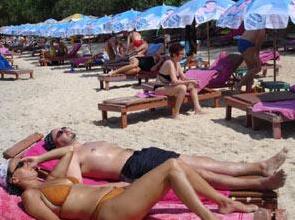
General Travel Tip - The passion of Sunbathing

Sunbath Passion
I had lived in Australia for almost 6 years between my highschool days... when I firstly arrived in Australia I was pretty exciting about how my life is gonna be from there on.. new environment.. new culture.. different lifestyles.. especially the communication which was very bad of my English skills. However, so far so good, I finally got my certificates and I learns how to lived in different places, different culture and different lifestyle by my own. but I'm still a little concious about the different of Human Habits I might say...

I was very surprised when I went to Bondi Beach and Surfer Paradise for the very first time. Thousands and thousands of people lied down on the sand along the beach, confronted with burning sunlight and very hot temperature in a very sunshine day. People seem to be loved it though, and lied down for hours. It's so strange habit for Asians as if any head-cutting circumstance they will avoid the sunlight. So I tried, lied down on the sand for hours then 2 days after I found that my skin was peeling like a snake!!

So what should be the passion of this habit? because it's just a tortured moment while we got a dried skin waiting to peel off.. it's very hurt though..eieie.. and people loved to do that though.. people from the west e.g. Eupore, America, Australia. Just wondering why? why?? and why??